Whenever someone asked me how I was enjoying The Path to Power during the two months I spent lugging it around, I would inevitably tell them about the grass and soil of Texas Hill Country.
Fifty pages before the birth of Lyndon B. Johnson in this first volume of his definitive biography, Robert Caro profiles the very land on which the future president would be born and raised. Caro describes the verdant grass and gently rolling hills that lured 19th century settlers into the isolated territory only to discover the land’s fertility was a deception, that the soil was rich but shallow, sitting atop a bedrock of limestone. It had taken centuries for Texas Hill Country to become verdant, but only a few short years to be ruined by agriculture.

At first it seems like a drastic, albeit beautifully written detour. But later, when Johnson’s father purchases a plot of land in a doomed attempt at becoming a farmer, the reader understands the foolishness of this decision as well as any neighbor must have.
In taking such care in describing the Hill Country, Caro provides unparalleled insights into the landscape Lyndon Johnson was born into, as well as a deeply nuanced understanding of his father’s failings – arguably the two most critical elements of the future president’s formative years.
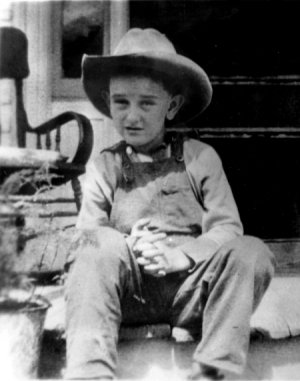
Throughout The Path to Power this meticulous detailing is on display. On several occasions the character of Lyndon Johnson will slip away as vivid portraits are painted of historical figures both major and minor. The chapter on Samuel Rayburn, in particular, is a spectacularly vivid portrait that could be read as a stand-alone piece.
Admittedly, there were a few moments where I felt Caro’s obsessive research bogs down the book’s momentum. In particular, the wonky minutiae with which the political maneuvering, permitting and financing for the Marshall Ford Dam is retold felt maddeningly detailed, though I could appreciate the emphasis as a major pivot point in Johnson’s early rise to power in Congress.
But overall, Caro’s fastidious attention to detail is this biography’s greatest asset. By the time Johnson succeeds in wiring his district with electricity I experienced a vicarious sense of wonder for the Hill Country folk whose lives would be forever changed for the better. And the work that went into unearthing Johnson’s affair with Alice Glass, or Caro’s stitching together of the murky dealings that went into Johnson’s 1941 Senate campaign funding would make great stories in themselves.

In a 1999 interview with Kurt Vonnegut, Caro explained his evolution as a biographer, “I came to see that I wasn’t really interested in writing a biography to tell the story of a famous man. I realized that what I wanted to do was to use biography as a means of illuminating the times and the great forces that shape the times-particularly political power.” With The Path to Power Caro has done just that, writing an exhaustive but never exhausting examination of the first half of Lyndon Johnson’s life along with a staggering panoramic depiction of the events, places, and people of the future president’s life.
The Path to Power only covers the very beginning of Johnson’s rise to power in American politics, and yet it is already without question the greatest biography I have ever encountered. It also – for its scope, its research, its beautiful prose – is shaping up to be one of the best pieces of writing I have ever experienced. All of Johnson’s greatest achievements and failures are still to come and the promise of being guided along the arc of this man’s political destiny by Robert Caro is about as exciting a literary summit to climb as I can imagine.

 Surf Sound